The Art of Impact - Plastic Thinker’s Burden
Anthropogenic demonstrates impact intelligence capabilities in the field with pioneering analysis of an art exhibit designed to catalyze systemic behavior change and influence critical multi-lateral Global Plastics Treaty dialogues.

Benjamin Von Wong - ©️Von Wong Productions 2025 - Global Plastics Treaty INC 5.2 - The Thinker’s Burden / Le Fardeau du Penseur
Abstract
Movement builders and the civil society sector know that art plays a critical role in driving behavior change and inspiring systemic transformation; however it is hard to directly analyze the impact of a specific exhibit or campaign on tangible action. This pilot project offers a data point to the collective archive in that mission. In a revolutionary approach to studying art in action, Anthropogenic teams up with the renowned artivist, Benjamin Von Wong (in collaboration with SLS Illusions), to gather impact intelligence on a provocative sculpture positioned outside of the UNHQ in Geneva during negotiations for the Global Plastics Treaty.
By integrating physical hardware for data collection on-site with remote data sources, we interpreted ripple effects of the exhibit. Notable insights include an unexpected correlation between the number of visitors and the number of press hits on a given day, as well as peak engagement periods, and which perspective of the sculpture visitors were most drawn to. This partnership articulates how the installation is not only a symbol, but an actionable force—where emotion became evidence, and that impact was measured in real-time.
Background + Context
Von Wong has leveraged his artistic platform for global messages since 2015, with notable Guiness World Record-holding Greenpeace #Strawpocalypse campaign in 2019. While his work covers a wide range of environmental campaigns, advocating against single-use plastics has been a through-line and in recent years, his work is a staple of key UN convenings.
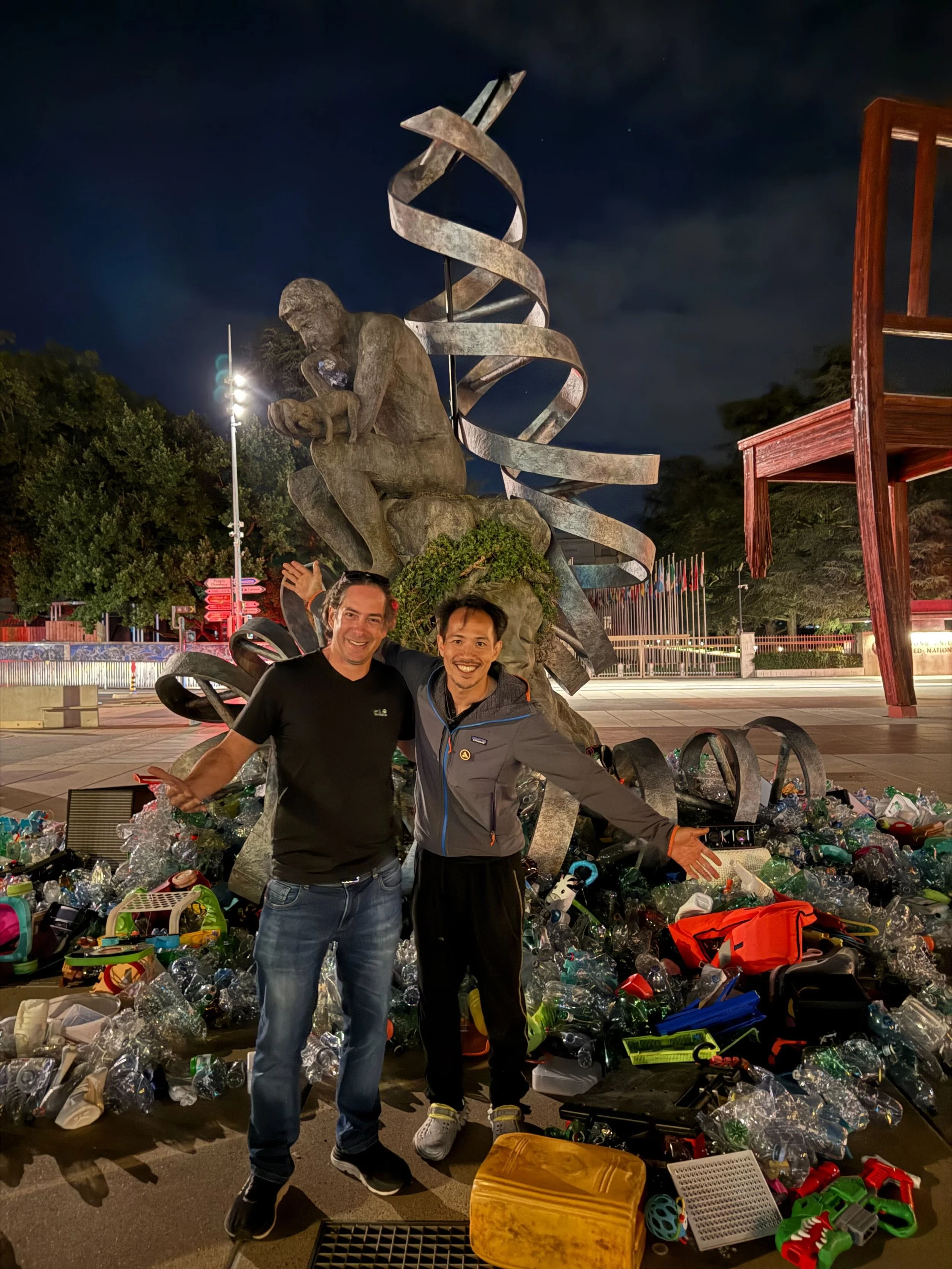
The Global Plastic Treaty Dialogues are one such series of convenings he consistently appears at with his thought-provoking campaigns. Notably “The Giant Plastic Tap” had a clear message to negotiators: turn off the plastic tap, stop and limit the production of fossil fuel-based plastics. Any treaty that does not include this directive has failed to properly address the issue at hand. The latest in this series of dialogues (at the time of this article) was INC-5.2 in Geneva. He chose a more nuanced message, appealing to delegates' innate concern for human health and wellbeing. The “Thinker’s Burden”, an homage to Rodin’s iconic Thinker, displays a 6-meter tall Thinker cradling a baby, sitting on Mother Earth, and surrounded by a DNA double-helix, emphasizing the threats of an unregulated plastics industry on both human and environmental health.
Positioned outside the UNHQ in Geneva at the scene of the negotiations, the art piece aimed to capture the attention of delegates and officials debating the future of global plastic policy. The installation served as an ever-present tangible reminder of the public's concern and the urgent need for action.
Technical Approach
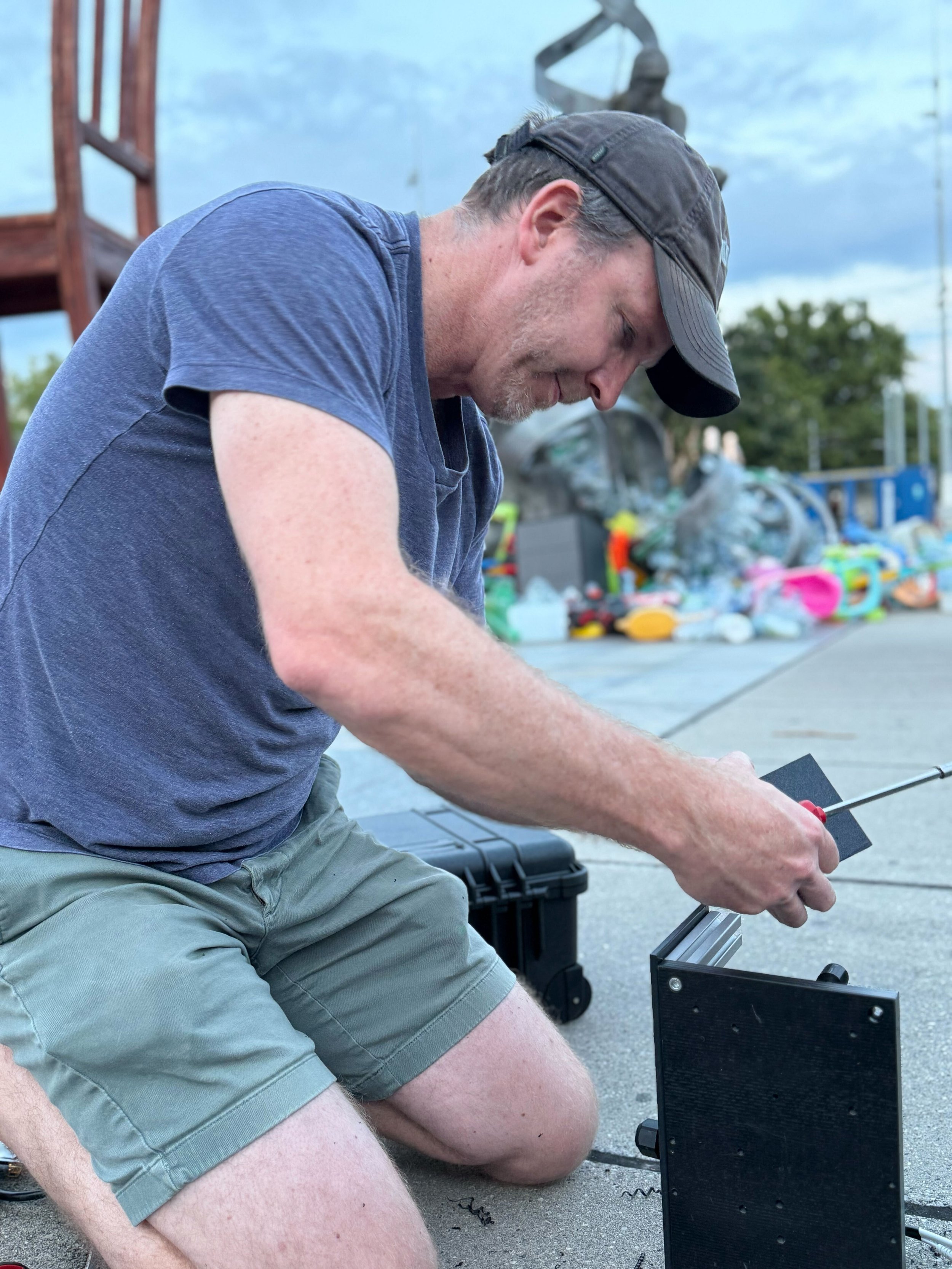
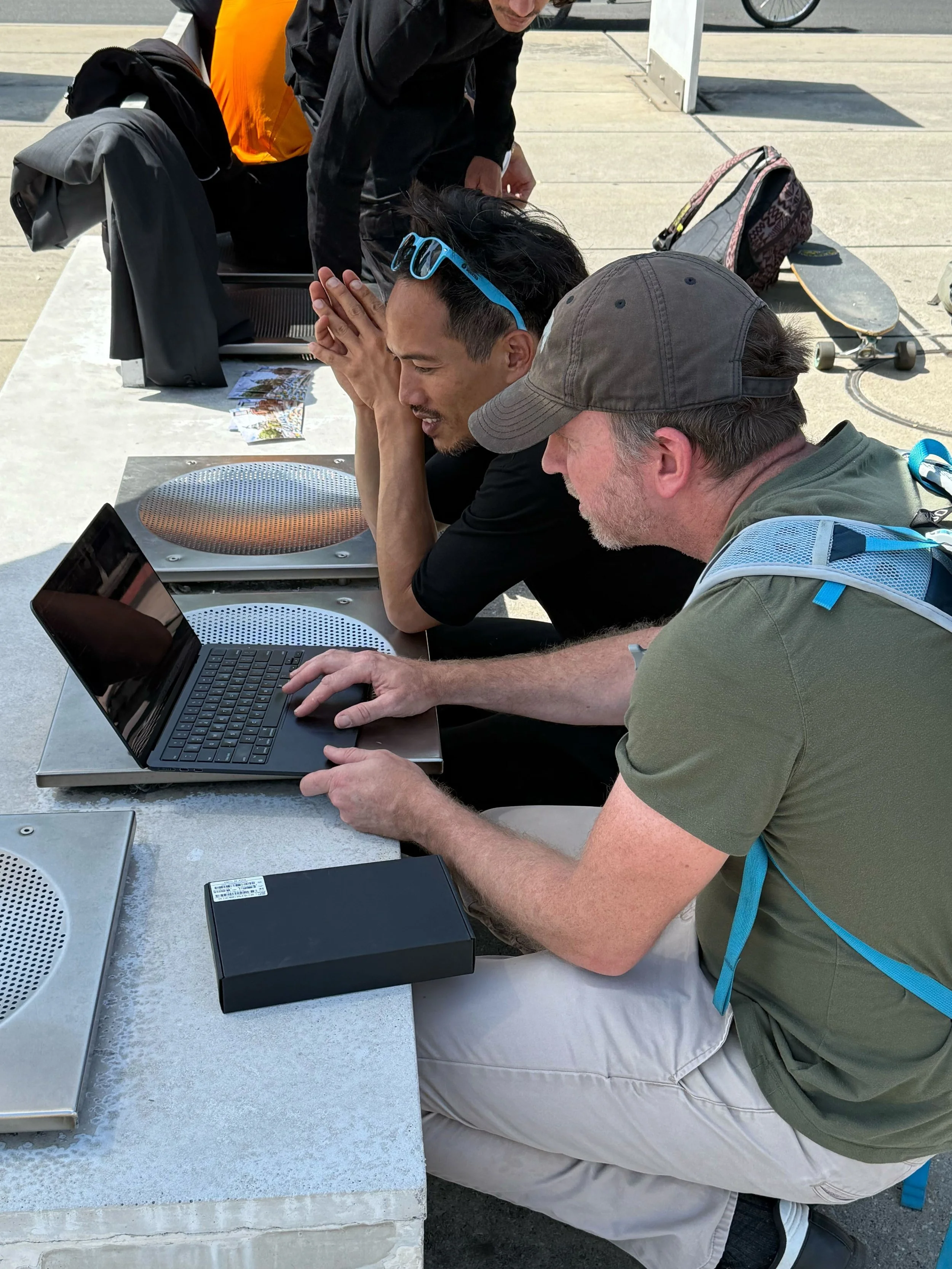
Team member spotlight: Jason MacLaren, remote systems engineer.
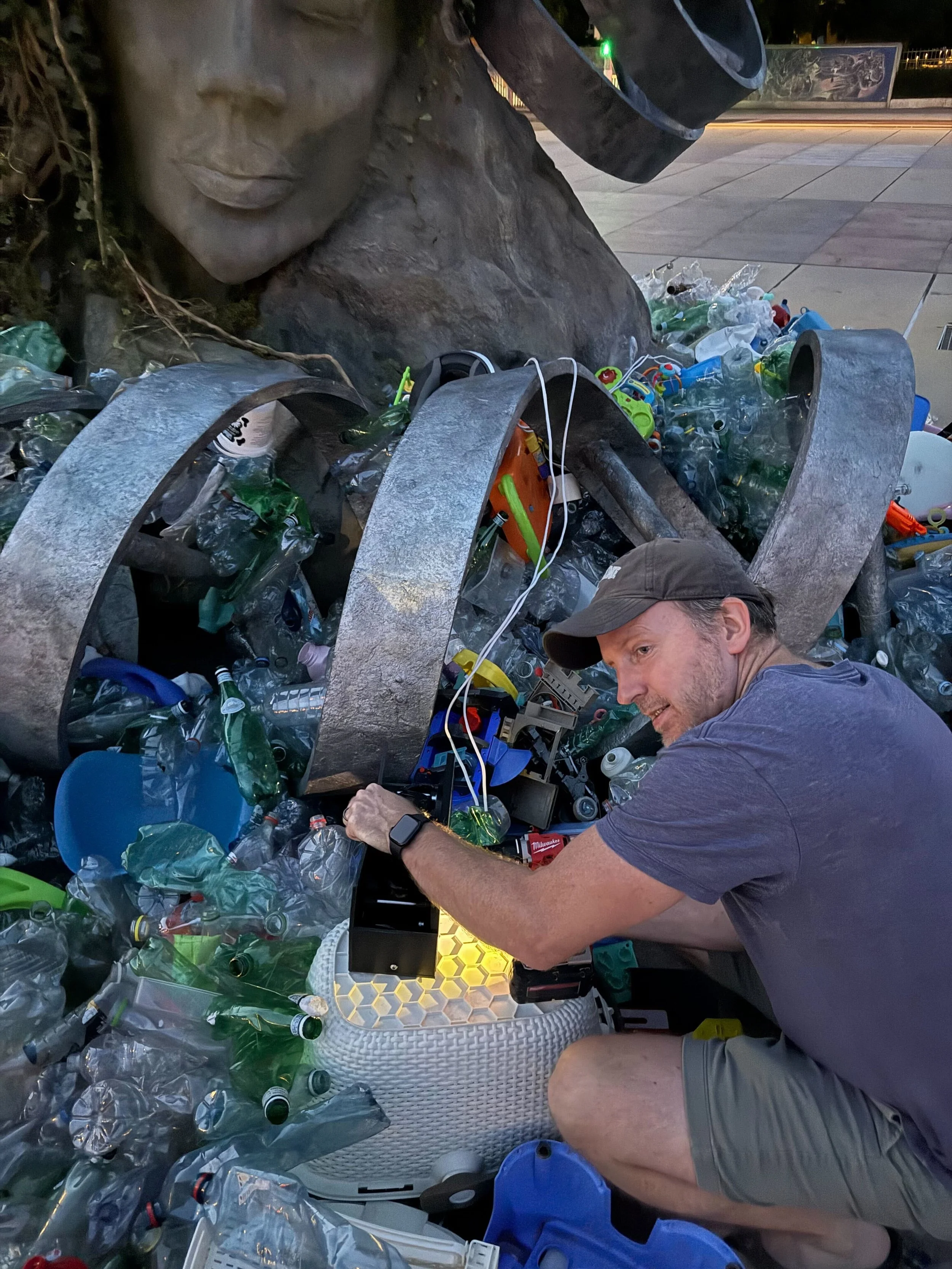
Using AI-powered computer vision deployed on an NVIDIA edge device with 4K cameras hidden throughout the installation, Anthropogenic automatically tracked visitor engagement—counting people, measuring dwell time and proximity, reviewing spatial density, analyzing faces to gauge attention, and detecting when visitors photographed the installation.
The deployment was engineered for harsh outdoor conditions—weatherproof housing, solar power with battery backup, and cellular connectivity for remote monitoring to run autonomously. The system captured millions of video frames over the length of the installation. Raw detection data was calibrated using validation-based correction factors to account for occlusion and tracking efficiency, providing reliable estimates of visitor engagement.
The system demonstrated the feasibility of quantitative impact measurement for public art installations, capturing behavioral patterns and temporal trends that would be impossible to assess through traditional observational methods.
Impact Insights
Counting and categorizing engagements with the art piece allowed us to transform passive viewing into quantifiable data, revealing the level of interest and interaction.
Key Data Points
Visitor Count: Approximately 40,000 tracked visitors, with over 5,500 on August 5th coinciding with critical treaty negotiations.
Dwell Time: How long visitors stayed near the sculpture, with groups averaging longer stays overall but solo visitors exhibiting the deepest individual engagement, some exceeding 13 minutes.
Proximity Analysis: Distance patterns showed highest density directly in front of the sculpture where visitors engaged with the artwork and signage.
Facial Engagement: Attention and gaze direction toward the artwork, with evening visitors (6-8 PM) sometimes showing 70%+ engagement rates.
Photo-Taking Behavior: Approximately 50% of visitors photographed the installation, with weekend rates reaching 65%.
Spatial Density: Heatmaps showed concentrated visitor clustering in front-center zones and secondary circulation patterns for multiple viewing angles.
Media Correlation: Visitor traffic and engagement levels tracked with press coverage of treaty negotiations, with August 5th showing peak activity (5,500+ visitors, 84% engagement) during maximum media attention.
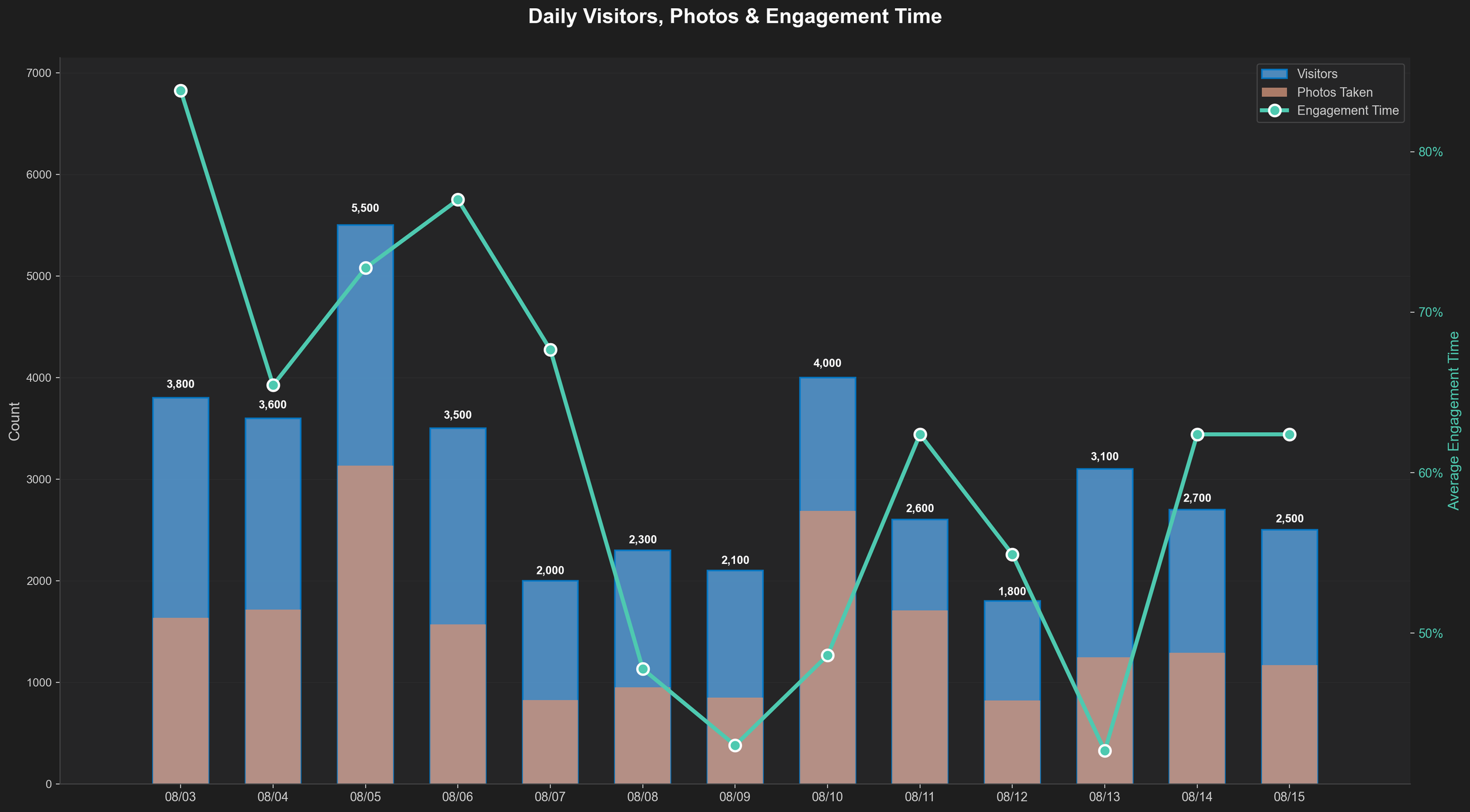
Tracking the number of visitors per day, photos taken, and rates of engagement shows that more than half of those who passed by engaged with the installation.
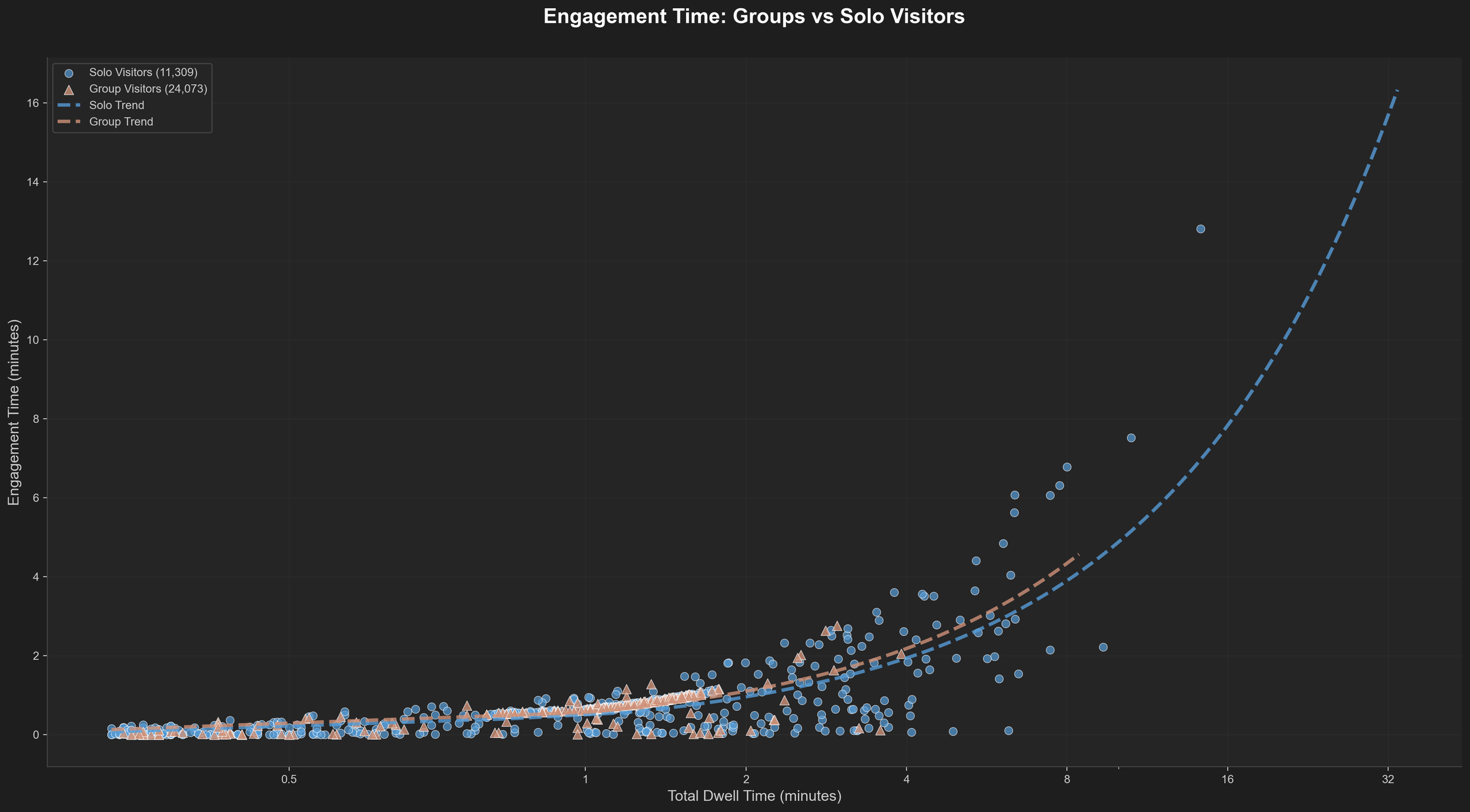
Groups on average spent more time engaging with the piece for the time they were dwelling, while solo visitors spent more time overall.
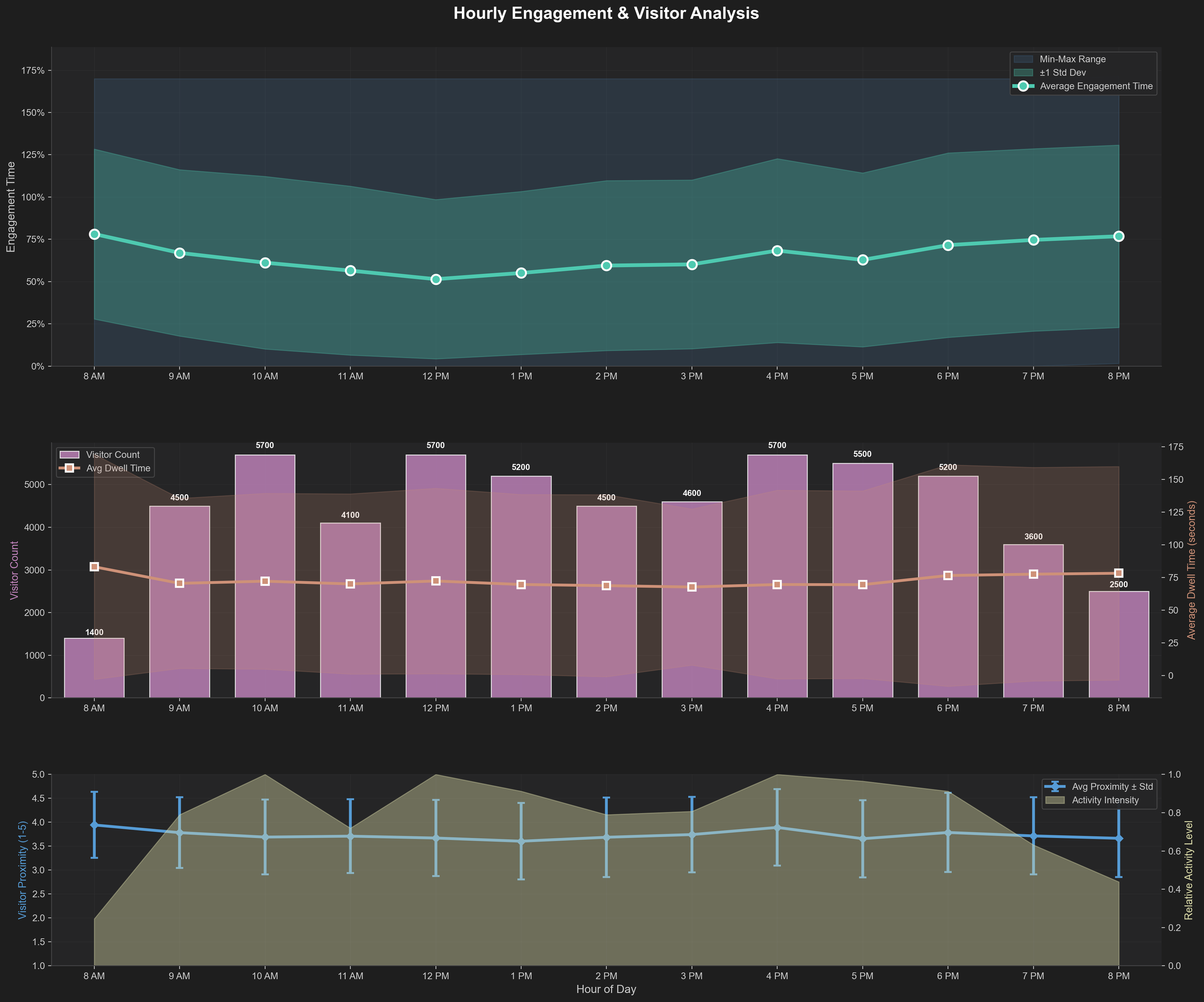
For a given day, we can see that engagement rates are higher proportionally when it is less crowded in the morning and evening.
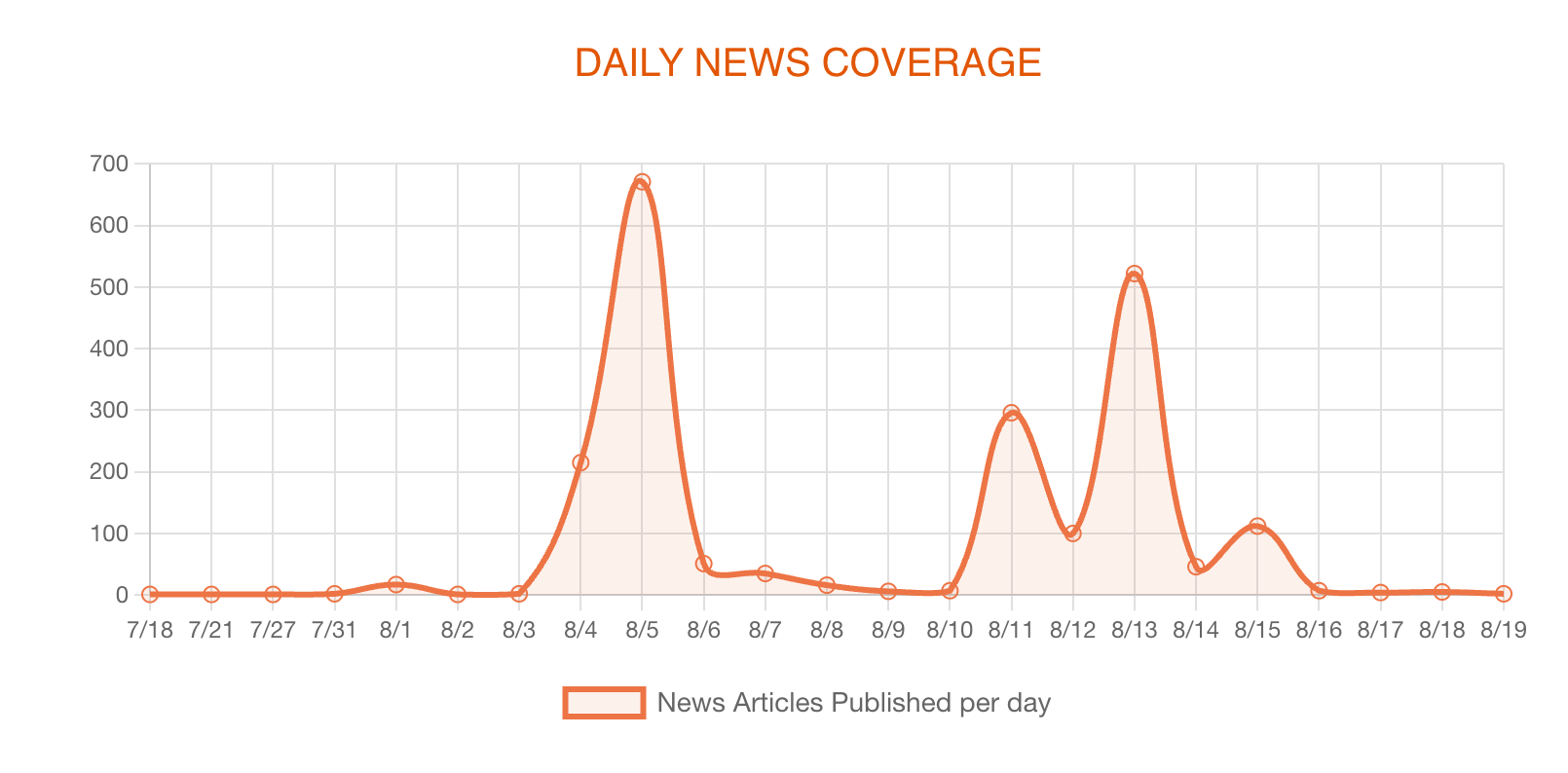
Daily news coverage on the art installation over the course of the treaty negotiations.
Conclusion + Future Work
This initial project brings up many questions for what is possible in the realm of data-infused art, and how intelligence can inform the iteration of artistic impact campaigns.
If every Von Wong installation throughout the INC series of dialogues reported such detailed visitor engagement data, we could interpret which campaign messages best capture the attention of delegates and spark visitor engagement. Insights like visitor spatial density and daily patterns can be leveraged to inform impact campaigns surrounding art installations like this. For example, guiding when best to activate the sculpture with moments of public speaking, organized rallies, or interactive campaigns to drive public comments into policy-making, as well as which camera angle best tells the story for a digital audience.
A prototype for live monitoring by Anthropogenic’s impact intelligence platform, stay tuned for more creative demonstrations.